Bildraum 01
September 2 - October 16, 2025
September 2 - October 16, 2025
At the edge of sight
Text
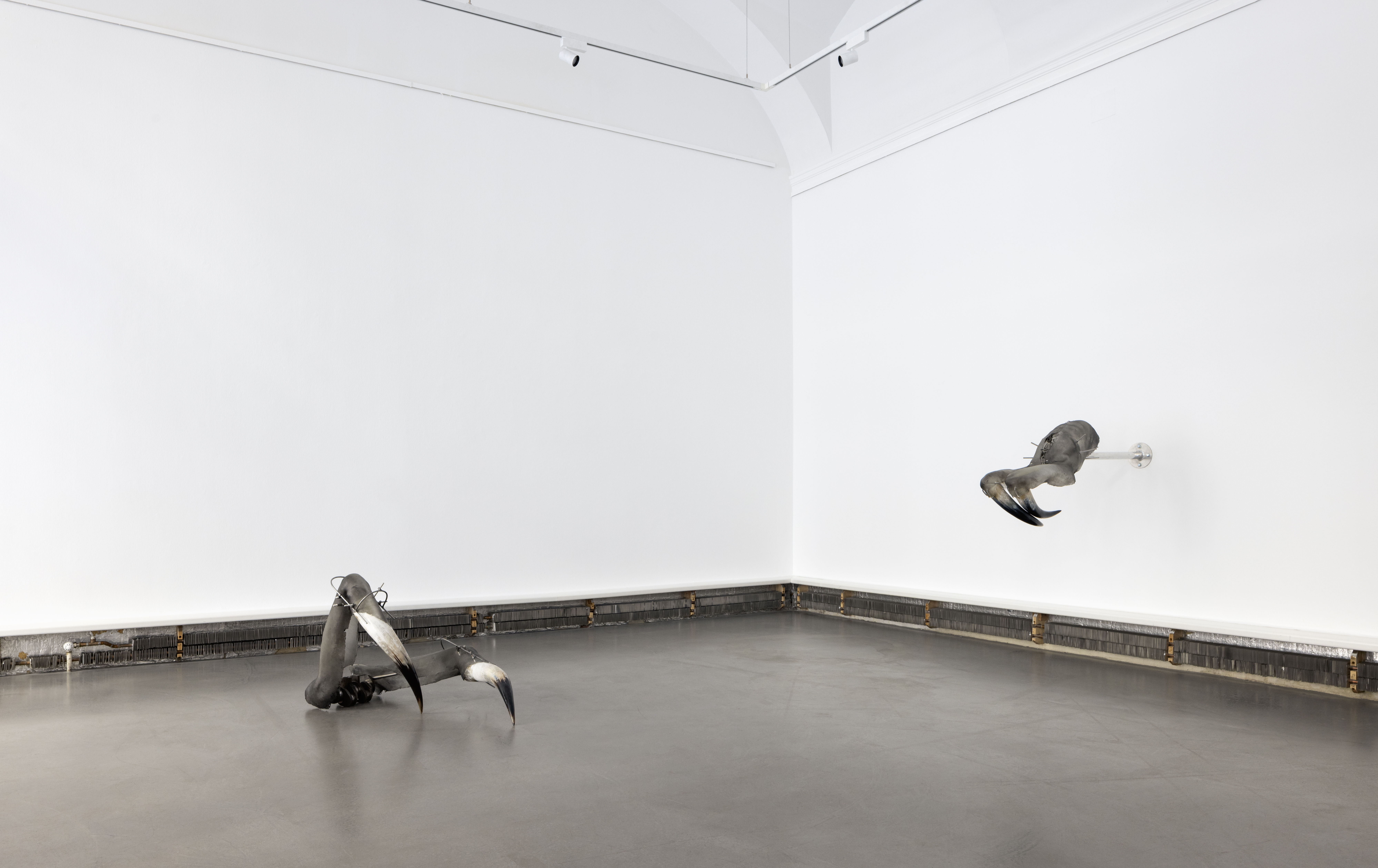
Exhibition transcends the morphological integrity of the human body in her exhibition at Bildraum 01. Sculptures in which human limbs merge with the horns of mammals articulate a radical vision of convergence and interconnectedness. The human body no longer appears as a closed, autonomous system, but as a permeable structure in constant transformation — a paradigm shift toward a human–animal hybridity.
Inspired by choreographer and performer Lisa Bufano, whose work proposes a renegotiation of corporeality — particularly the perception of disability — Sophia Gatzkan understands transformation as an inherent and inevitable extension of the human body. In her hybrid beings, organic materials, technological fragments, and mythological echoes encounter one another. They address the kinship between humans and animals and capture the openness and potential of the human “design,” allowing possibilities of self‑shaping and self‑transcendence to emerge.
A central theoretical reference point is Manuel DeLanda’s concept of assemblage. Assemblages — understood as symbioses of heterogeneous elements — illustrate the interplay of technology, nature, and the body. The image of the rider becomes a metaphor: human and animal, technology and organics do not act separately, but as an expanded system of agency. Sophia Gatzkan’s sculptures explore the possibilities of this interplay. By identifying and employing unique animal characteristics (e.g., self‑generative and/or defensive qualities), the artist creates speculative designs that reveal the body not as a boundary but as a dynamic interface.
At the edge of sight opens up spaces of possibility for reflections on bodily ambiguity and fluid being, and asks about new paradigms of kinship, vulnerability, and creation.
text by Sira-Zoé Schmid, Bildrecht
Text
Exhibition transcends the morphological integrity of the human body in her exhibition at Bildraum 01. Sculptures in which human limbs merge with the horns of mammals articulate a radical vision of convergence and interconnectedness. The human body no longer appears as a closed, autonomous system, but as a permeable structure in constant transformation — a paradigm shift toward a human–animal hybridity.
Inspired by choreographer and performer Lisa Bufano, whose work proposes a renegotiation of corporeality — particularly the perception of disability — Sophia Gatzkan understands transformation as an inherent and inevitable extension of the human body. In her hybrid beings, organic materials, technological fragments, and mythological echoes encounter one another. They address the kinship between humans and animals and capture the openness and potential of the human “design,” allowing possibilities of self‑shaping and self‑transcendence to emerge.
A central theoretical reference point is Manuel DeLanda’s concept of assemblage. Assemblages — understood as symbioses of heterogeneous elements — illustrate the interplay of technology, nature, and the body. The image of the rider becomes a metaphor: human and animal, technology and organics do not act separately, but as an expanded system of agency. Sophia Gatzkan’s sculptures explore the possibilities of this interplay. By identifying and employing unique animal characteristics (e.g., self‑generative and/or defensive qualities), the artist creates speculative designs that reveal the body not as a boundary but as a dynamic interface.
At the edge of sight opens up spaces of possibility for reflections on bodily ambiguity and fluid being, and asks about new paradigms of kinship, vulnerability, and creation.
text by Sira-Zoé Schmid, Bildrecht
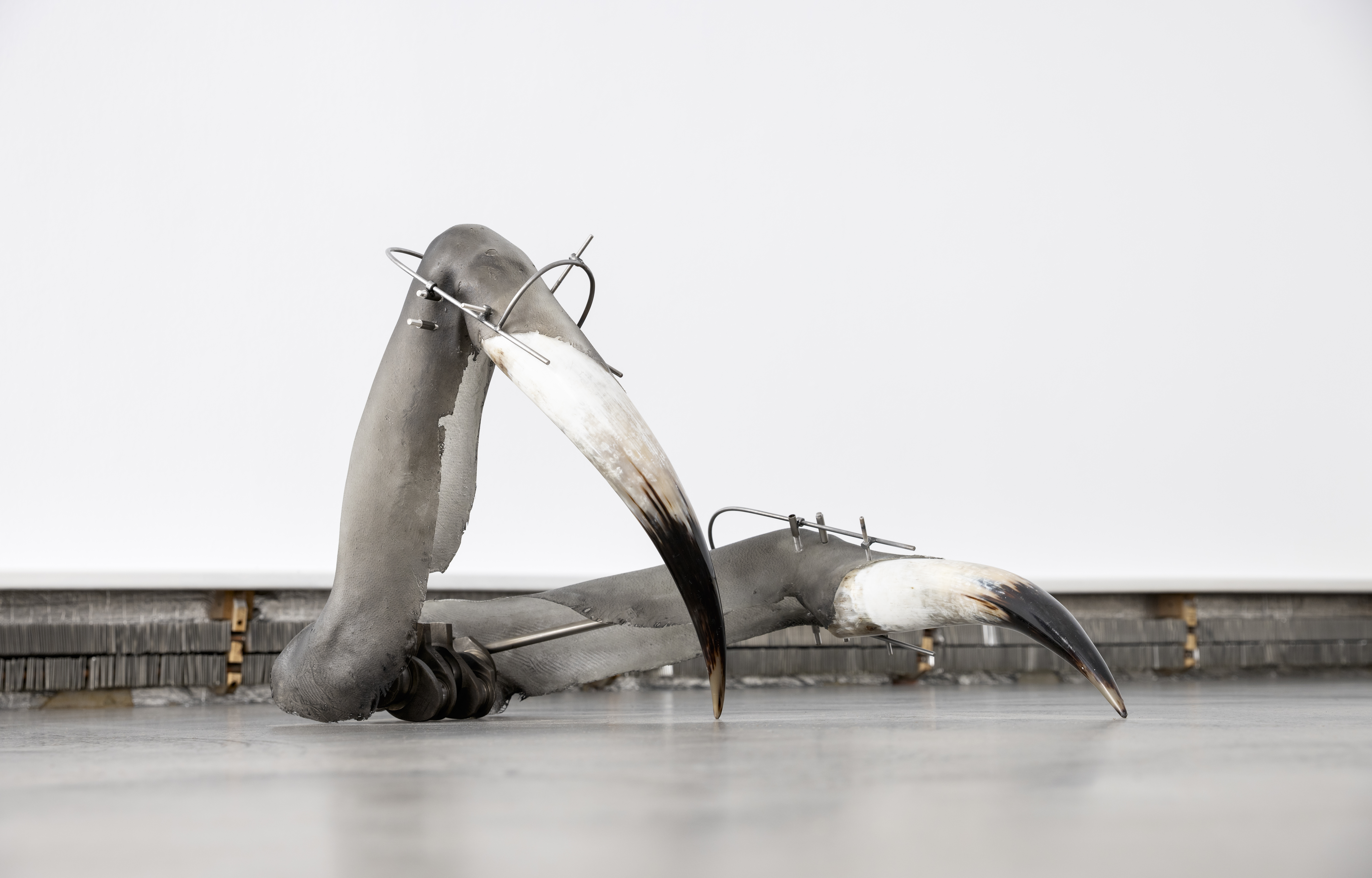
utopian dream of a salamander, 2025
horn, glassfiber, resin, pigment, auto and motorcycle parts, metal
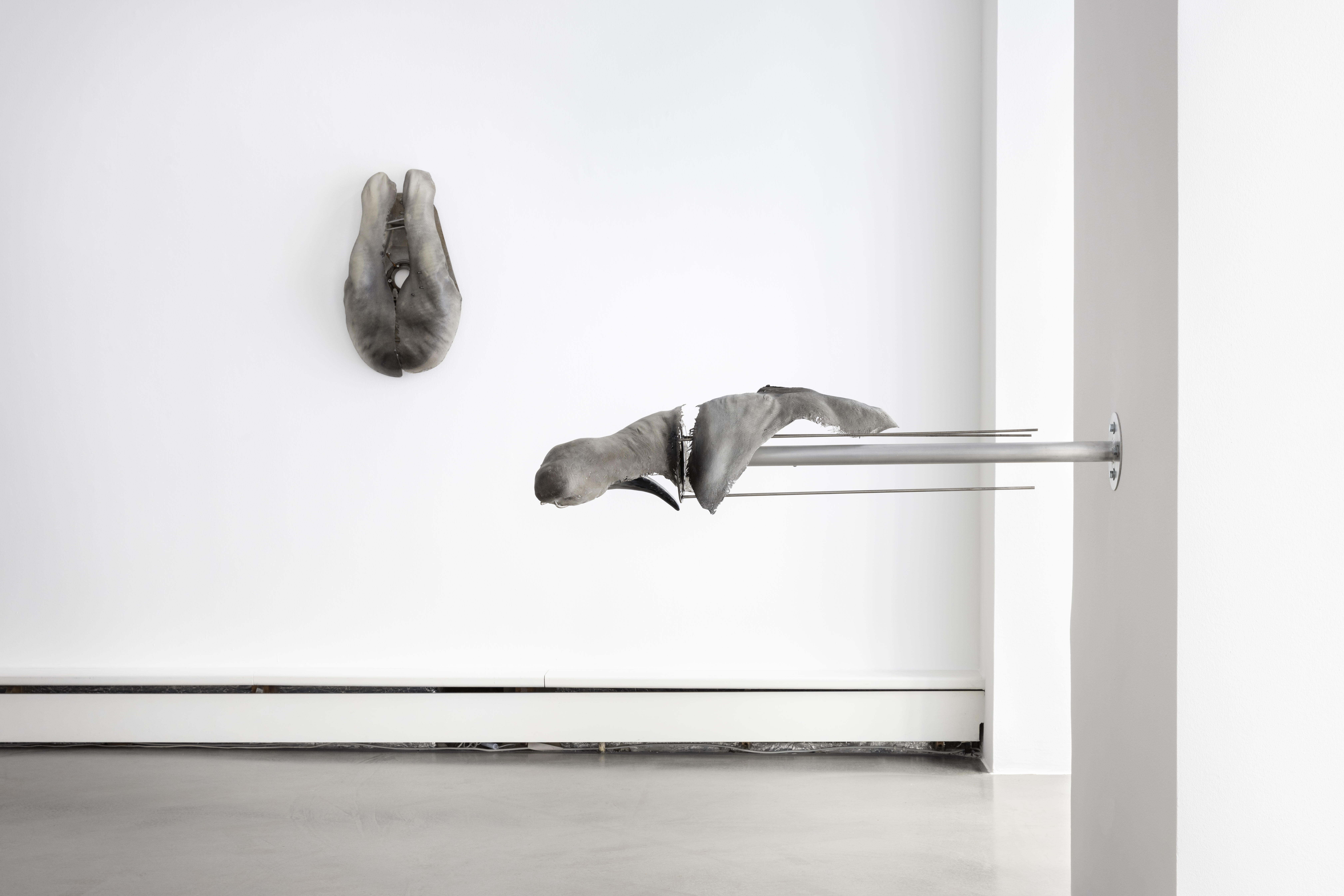 strager looking upon its naked loveliness, 2025 (foreground)
 horn, car parts, metal, resin, glassfiber
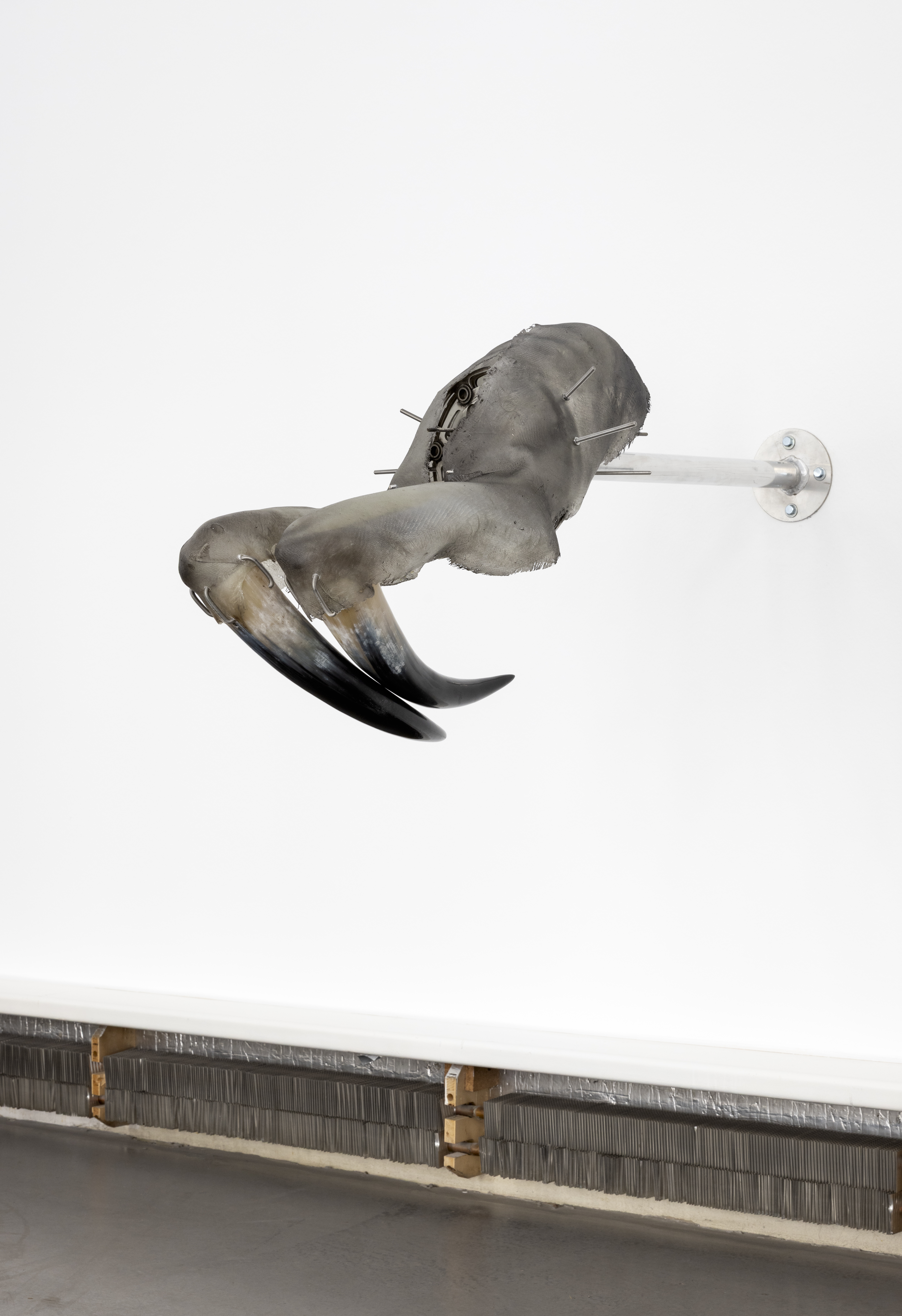 without the bloodbond the arch would fall, 2025 (Ursula K. Le Guin The Left Hand of Darkness p.7 )
horn, resin, fiberglass , scrap vehicle parts, pigment, glue, hair residue